
Practical bakery buying guide
Whole cakes or individual desserts for a company event?
Start with how people will receive their dessert. A whole cake gives a company celebration a shared focal point. Individual portions can suit staggered arrivals or a short meeting break. A mixed order can do both, provided the serving plan is clear.
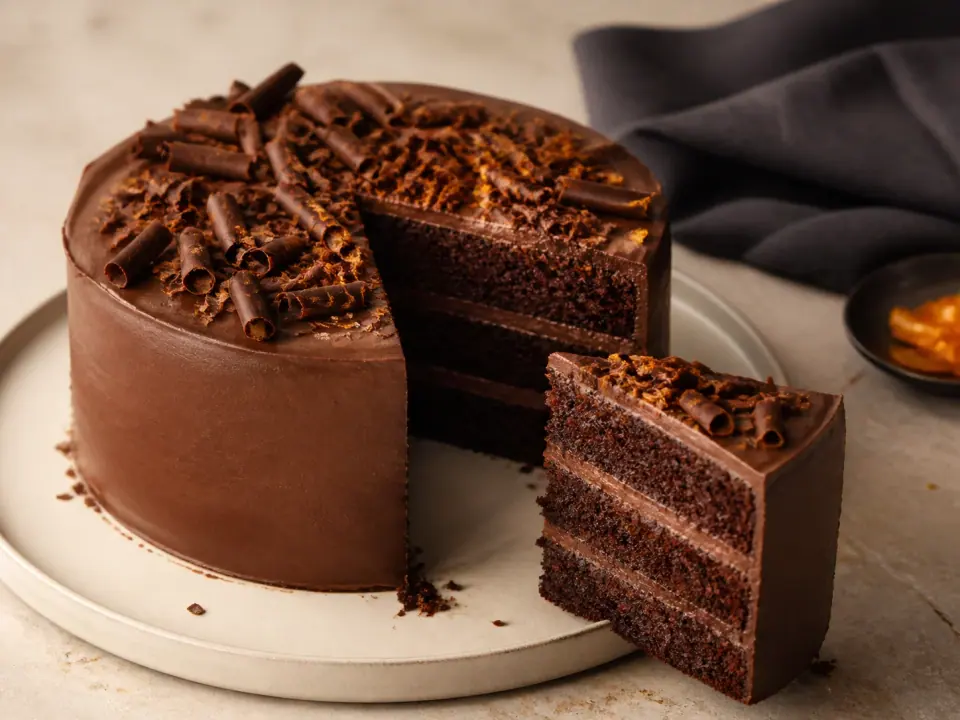
Choose for the event’s serving moment
Use the agenda to identify when dessert will be served and how much time is available. A company anniversary with a planned cake-cutting moment has a different requirement from a workshop where guests collect refreshments in a ten-minute break.
Consider whether everyone arrives together, whether guests will sit or stand, and whether the order will be served at one table or several locations. These details narrow the choice before flavours or presentation references are discussed.
Compare the practical differences
The comparison below describes serving formats, not a promise that every product is available in every style. Confirm portion sizes, packaging and handling instructions for the exact products in your quotation.
Individual desserts cover more than one serving style. A cupcake may be handed to a guest, a cake portion may need a plate and fork, and a small pastry may be one of several bites. Confirm what each format needs instead of assuming every individual item is equally easy to serve.
| Decision | Whole cake | Individual desserts |
|---|---|---|
| Shared celebration | Creates a focal point for a planned cutting moment. | Can be distributed without a central cutting moment. |
| Serving work | Assign someone to cut, plate and distribute portions. | Agree how portions will be displayed, handed out or packed. |
| Staggered arrivals | Plan who will serve later arrivals and how remaining portions are handled. | Allocate quantities across arrival times and service points. |
| Portion counting | Confirm the intended serving size and expected yield. | Confirm pieces per pack; one small piece may not equal one dessert serving. |
| Equipment | Check cutting tools, plates, cutlery and table space. | Check display trays, serving utensils and any individual packaging. |
Count servings before counting products
A headcount is a starting point, not a complete product quantity. Explain whether dessert is the main sweet course, one item beside a wider meal, or a small bite with coffee. Ask the bakery to confirm how the chosen format relates to the servings you need.
For example, an organiser expecting 60 attendees might allocate 20 servings to a shared cake and 40 to individual desserts. That is a planning example, not a recommended quantity or a claim about a particular cake’s yield. The bakery still needs to confirm the cake size, serving plan and product quantities.
Avoid counting everyone once for cake and again for individual desserts unless two desserts per person are intentional. If attendance is uncertain, state the range and the date you can confirm it rather than hiding the uncertainty in an unexplained buffer.
Calculate mini-pastry quantities separately from dessert servings
Scenario: a celebration with a planned cake-cutting moment
A shared cake is a useful focal point when the agenda makes room for it. Plan the transition from the photo or cutting moment to actually serving the guests: who takes over, where portions are plated and how they reach the room. Confirm the expected yield with the bakery for the intended serving size.
If individual desserts are also included, decide whether they are an alternative for some attendees or a second course for everyone. The distinction affects both quantity and cost. A ceremonial cake plus separately allocated individual servings can be a coherent plan, but the service team needs that allocation written down.
If no one is available to cut and plate, address the staffing or format question before confirming the cake. Do not assume the bakery supplies on-site cutting, utensils or event staff as part of the product order.
Scenario: a short meeting break or staggered arrivals
Individual portions can fit a short break because the organiser can allocate them before guests arrive. However, the distribution point still matters. A single narrow table can create a queue even when nothing needs cutting. Plan how many service points are needed, what each holds and who replenishes them.
For a fictional workshop with two rooms of 30 attendees, a starting allocation is 30 intended dessert servings per room. That is a distribution plan, not a pastry piece count. Translate each room’s requirement into the confirmed product and pack quantities so one room does not receive all of a particular choice.
For staggered arrivals, assign quantities across the arrival periods and follow the supplier’s product-specific holding and serving instructions. Do not plan for the whole order to sit out for the entire event without checking whether the products and venue can support that arrangement.
When a mixed format adds value, and when it adds work
A mixed format can serve two clear needs: a shared celebration and convenient individual distribution. It becomes harder to manage when each extra item adds packing, utensils or service work without a distinct purpose. Ask what each format contributes and remove choices that duplicate the same role.
Compare the complete requirement, including serving supplies and the team’s responsibilities. Whole cake is not inherently cheaper, and individual desserts are not automatically quicker in every room. Product specifications, quantities and the actual handover process determine the useful comparison.
If the plan is unclear, test it as a short walkthrough: where is the order received, where does each format wait, who prepares it, and how does one guest receive a portion? An unanswered step usually identifies the next decision more clearly than another round of flavour choices.
Plan receiving, holding and distribution
Ask the venue who will receive the order and where it will be placed before service. Share the distance between the receiving area and event space, any restricted access and whether staff are available to move and display the products.
Obtain product-specific storage and serving instructions from the supplier. Do not infer handling requirements from a product name or a photograph. If the venue cannot support the required arrangement, resolve the format or service plan before confirming the order.
List dietary or allergen requirements separately and ask about the exact products being considered. Different-looking desserts are not evidence of different ingredients or suitability. The organiser needs clear, confirmed information to pass to the service team.
Make the final brief easy to quote
For a cake-led celebration, describe the shared moment, required servings and who will portion the cake. For individually served desserts, describe the distribution method, serving points and whether people will eat immediately or take items away. For a mixed order, split the expected servings between formats.
Send The Cake Factory the event date, location, estimated attendance, serving plan, budget range and any requirements the team should review. If you have not chosen a format, state the practical constraints and ask which options from the range are suitable.
- Purpose and agenda of the event
- Confirmed headcount or attendance range
- Servings allocated to each format
- Receiving and service responsibilities
- Equipment, packaging and product-suitability questions