
Practical bakery buying guide
How to brief a wholesale bakery
To get a useful wholesale bakery quote, explain the products or serving format you need, the likely quantity, when and where you will receive the order, and how your team will use it. You can enquire before every detail is final: clearly separate your requirements, estimates and questions. This guide helps Singapore business buyers prepare that first brief.
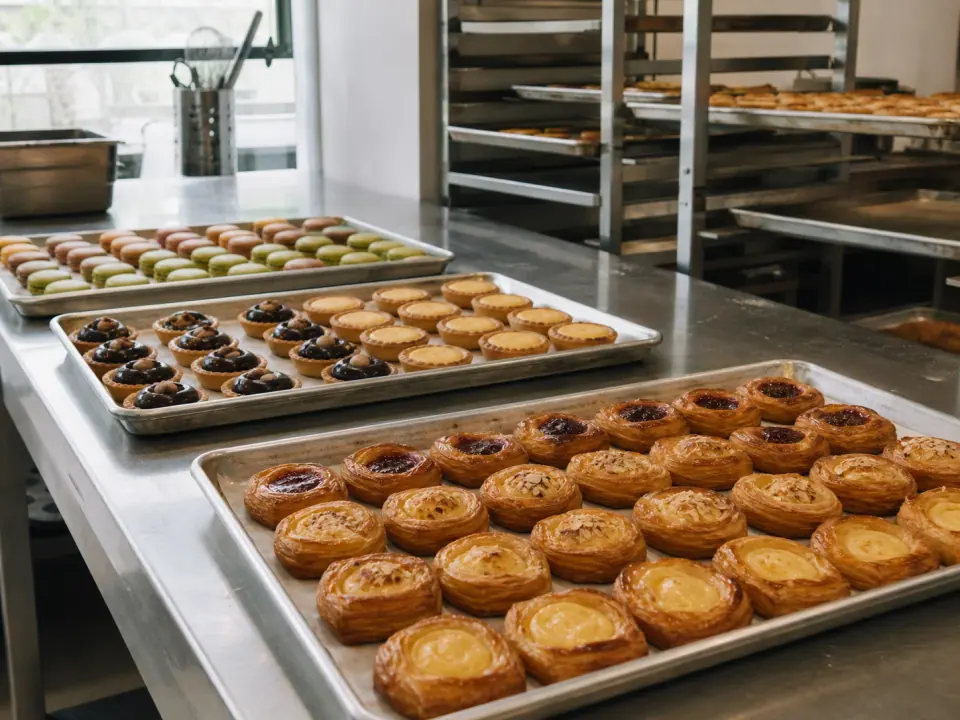
Start with the job the bakes need to do
“We need pastries” leaves the supplier guessing about portion size, preparation and quantity. Describe the use first: a takeaway café counter, plated hotel dessert, meeting break or recurring catering requirement. Say what the bakes need to add to the existing menu and whether your team will serve them as received or do further preparation.
For recurring supply, distinguish your opening order from your expected routine. A launch-week estimate is not yet a standing weekly requirement. Include how many outlets or service points the order covers, and whether each needs a separate product mix or receiving arrangement. This helps the supplier identify which details need to be quoted separately.
Specify the product format without over-prescribing the range
Name the category you are considering, then explain the practical constraints. “Individual cake portions for takeaway, with no cutting at the counter” communicates more than a flavour list. If you have flexibility, state which alternatives you would consider and which features matter most.
Request the actual portion description, pieces per pack and any minimum quantity for the proposed products. Product photographs do not establish dimensions or yield. If you need a whole cake divided into saleable slices, ask how the quoted size relates to your intended serving size and who is responsible for portioning.
| Instead of | Include |
|---|---|
| “Send your pastry catalogue.” | “We need a small sweet range for a takeaway coffee counter. Please suggest formats and confirm packing.” |
| “We need cakes every week.” | “We are estimating weekly supply for one outlet; our first order will be a trial before we confirm the regular mix.” |
| “Can you deliver in the morning?” | “Our receiving contact is available during this window; please confirm whether it can be accommodated.” |
Separate confirmed quantities from forecasts
List the unit behind every number. Forty pieces, forty boxes and forty servings can describe very different orders. For each product, include the quantity you expect to use and ask how pack sizes affect what you must purchase. Keep a guest count or forecast alongside the proposed product quantity so the assumptions remain visible.
If demand is uncertain, give a range and a date for confirming it. For a café, use existing sales of comparable products where you have them; for a new range, label your estimate as a trial assumption. Ask when the supplier needs final quantities and whether changes can be accepted. An enquiry does not reserve stock or confirm a recurring slot.
Explain receiving, storage and service constraints
For a Singapore office, café or hospitality venue, include the full receiving address and relevant access details: unit or floor, loading point, registration requirements and the person who can accept the order. Separate the desired arrival window from the time service begins. Ask the supplier to confirm the available delivery or collection arrangement before relying on it.
Describe the storage space, equipment and staff time actually available. Ask for instructions covering the exact products, including storage, any preparation and the relevant use-by information. If the proposed product needs equipment or handling your team cannot provide, resolve that before choosing it. Do not treat one product’s instructions as guidance for an entire bakery category.
Set out budget, food requirements and decision ownership
Give a budget range and explain what it must cover. Product cost alone is different from a total that includes packing and fulfilment. Ask the supplier to show inclusions and applicable charges clearly. If you require company billing details, a purchase-order reference or internal approval before payment, mention that at the enquiry stage and ask what arrangements are available.
List dietary and allergen requirements individually, including cross-contact concerns where relevant, and ask for confirmation for the exact proposed products. A broad label such as “suitable for everyone” is not a usable instruction. Keep the confirmed product information available to the people who will serve or sell the bakes.
Choose one person to consolidate decisions. If a café owner chooses the range, an outlet manager receives it and accounts arranges payment, identify those responsibilities. The supplier should be able to tell which message contains the agreed brief rather than reconcile several different versions.
Worked example: a café preparing a first enquiry
This fictional example shows the level of detail that makes an enquiry actionable. It is not a case study, an offer of a trial programme or a statement of The Cake Factory’s pack sizes or terms.
“We run one café in Singapore and want to trial individual sweet bakes beside our takeaway coffee menu. We estimate 40 portions across two product formats for the first order. The mix is flexible, but staff will not cut or finish products during service. Please suggest suitable options and confirm portion descriptions, packing and minimums.”
“Our preferred first service date is [date]. Our receiving contact can accept an order during [window] at [address and access details]; please confirm the available arrangement. We can share our storage and display setup for your review. Our working budget is [range], including packing and fulfilment. We will confirm food requirements and final quantities by an agreed deadline before placing the order.”
The useful next reply is now specific: suitable formats, a quote based on actual packs, receiving options and outstanding questions. The example gives the supplier room to advise without turning estimates into commitments.
Copy-and-send wholesale bakery enquiry template
Use this template for an initial enquiry. Mark unknown fields “to confirm” and distinguish the first order from future estimates. A concise, complete brief is easier to answer than a long email with conflicting quantities.
- Company, outlet or venue, and main contact:
- Purpose of the order and how the bakes will be served:
- Preferred categories, portion format and acceptable alternatives:
- Estimated usable quantity for the first order, with units:
- Expected recurring requirement, if relevant; mark as a forecast:
- Preferred date, receiving address, access details and contact window:
- Storage, display, preparation equipment and staffing constraints:
- Budget range and what it needs to include:
- Exact dietary or allergen questions to confirm:
- Packing, billing and delivery or collection questions:
- Who approves the order, and when final quantities will be known:
Check the reply before treating the order as confirmed
Match the quotation to your brief: exact products, quantities, pack counts, total cost and fulfilment details. Record which questions remain unresolved, including substitutions and the process for later changes. If the product mix changes, recheck any affected food information and receiving needs.
For ongoing café supply, the next step is to assess the products during real service as well as on paper. When contacting The Cake Factory, send the completed brief and ask the team to confirm the current options for your requirement.